
You will appreciate not only the aesthetics of a well-designed bathroom.
In everyday life, what you will notice most is the fluidity of everyday gestures.
No effort to reach the objects you need, no shelf sticking out too much, no domino effect from objects falling because they are too tight and close together.
Movements become natural, objects are found where the body spontaneously looks for them.
Sounds good, right?
The “invisible zone of the bathroom”: the movement map that changes everything
There is a kind of invisible map, made of daily gestures, that determines whether the space will feel natural or uncomfortable, even when everything seems correctly placed.
Interior designers call it movement ergonomics: it is the design of spaces based on the natural gestures of the body, so that every action happens smoothly, intuitively, and without obstacles.
We can imagine the empty spaces as the invisible zone of the bathroom: the space the body passes through without obstacles.
When this area is respected, the bathroom works. When ignored, small daily annoyances start that are hard to explain but impossible not to notice.
This also depends on how not only the main pieces but also the bathroom accessories are positioned, closely linked to daily movements.
Plus, knowing exactly where to place each piece saves you from that frustrating feeling of having drilled the tiles in the wrong spot – a mistake hard to fix and impossible to ignore every day.
Here you will find all the heights and measurements to consider when positioning all the elements that make up your bathroom.
When materials, proportions, and details are carefully studied, even accessories make a difference over time.
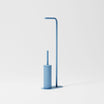
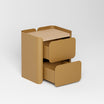
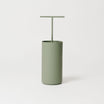
Enter the world of Hiro and discover bathroom accessories made in Italy, designed to last and bring balance, functionality, and color to the space.
What can bathroom accessories be like?
Bathroom accessories are not minor details: they are the system that holds together the functionality and visual identity of your project.
They can be:
-
floor-standing, ideal when you don’t want to drill into new coverings or are looking for flexible solutions;
-
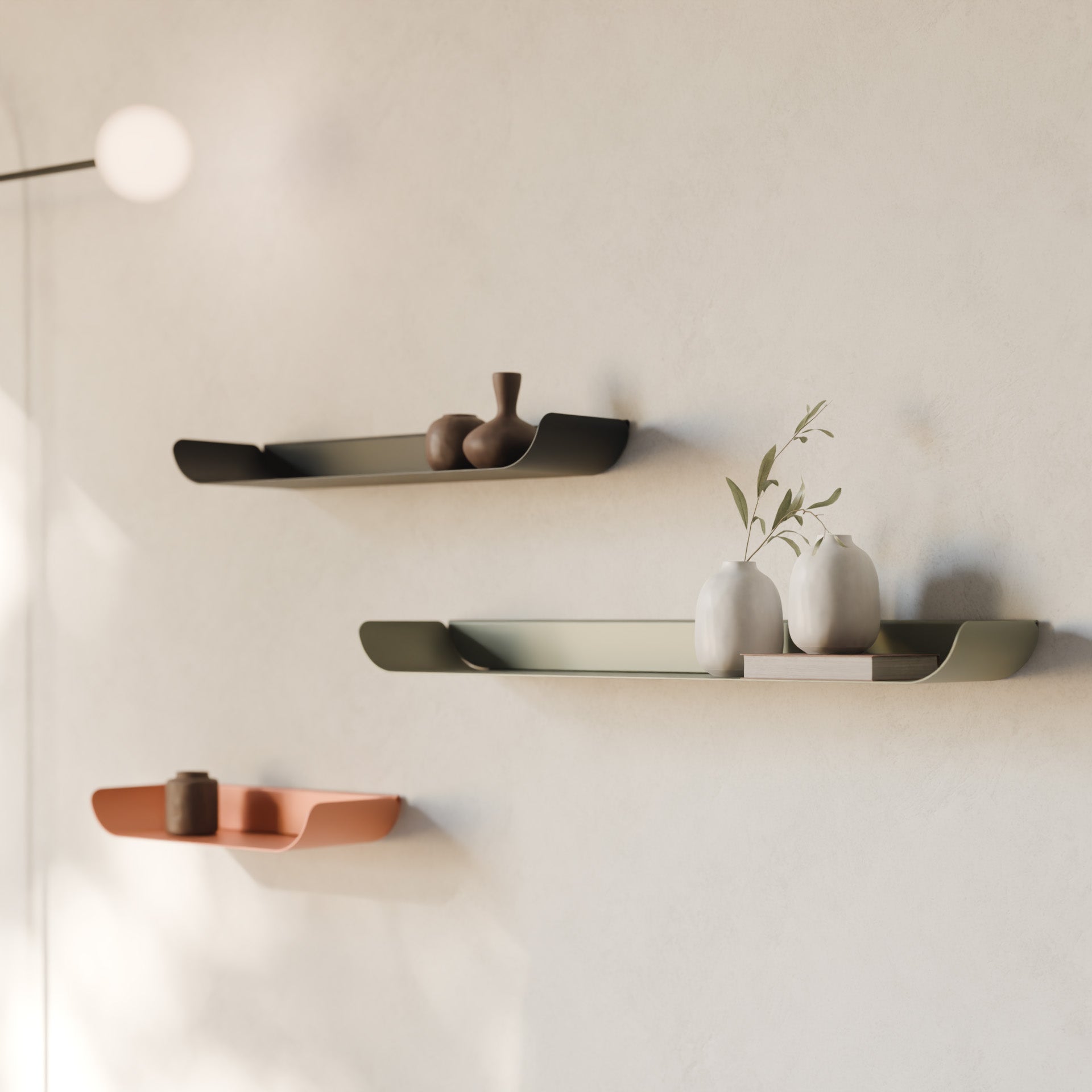
wall-mounted, more essential and visually lighter, perfect for keeping the floor clear and making cleaning easier.
The choice concerns not only the space but also the aesthetic language of the bathroom.
Coordinated bathroom accessories, with consistent finishes and carefully chosen colors, become the common thread capable of transforming even a simple space into a thoughtfully designed environment.
If you want to understand which elements really make a difference in daily life, find a complete guide here: Bathroom accessories: the essentials for style and comfort.

What is the best material for bathroom accessories?
In an environment where humidity, steam, and detergents coexist every day, choosing the right material is essential to avoid premature deterioration, stubborn stains, and surfaces that lose their beauty too quickly.
Stainless steel was made for this: to resist without requiring excessive care, maintaining a clean and contemporary aesthetic.
Stainless steel is naturally corrosion-resistant thanks to an invisible protective layer that regenerates when exposed to air. This makes it particularly suitable for bathroom accessories, which are often touched and subjected to constant changes in temperature and humidity.
But even the best materials work really well when treated with care.
How to keep stainless steel looking beautiful over time
Stainless steel is a durable material, but its beauty also depends on small daily care.
For cleaning, use a soft damp cloth and dry with a microfiber cloth.
Avoid abrasive sponges.
Also, it is advisable to avoid contact with harsh detergents, which can alter its surface.
An occasional check allows you to spot any signs of wear and preserve the original look of the accessories over time.
However, durability does not depend solely on the material. Design plays a fundamental role: choose accessories designed to prevent water stagnation and facilitate daily cleaning. They last better and longer.
The value of design lies in the small detailsA well-designed object enhances everyday gestures, making the space more fluid, intuitive, and enjoyable to live in. Our work at Hiro is born from the balance between functionality, color, and durability: we believe that even the smallest elements can help build a harmonious home, combining practicality and aesthetic identity without excess. Follow us on Instagram to actively participate in voting on new products and their names and closely follow the evolution of the projects. |
How to position bathroom accessories?
Here are the fundamental measurements for each element, explained practically, so you can create a harmonious and comfortable bathroom to live in every day.
These are not random numbers: they come from the way the body moves in space.
How to position the towel holder next to the sink?
The wall-mounted towel holder should never be lower than the height of the sink.
The correct height is about 100–105 cm from the floor and 20 or 30 cm from the side of the sink.
The freestanding towel holder, on the other hand, must be within the natural arm’s reach while you are in front of the sink. If you have to take a step, the placement is wrong.
This way, drying hands becomes an easy gesture, which does not involve bending or raising the arms too much. When it is too low, water drips on the floor; when it is too high, it interrupts the natural movement.

At what height should the bidet towel holder be installed?
When it comes to a wall-mounted towel holder, the type of gesture comes into play here.
-
Above the bidet, centered: about 90 cm from the floor.
- Beside the bidet: 70-75 cm, because the movement changes and becomes lateral.
The side position is more elegant: it lightens the wall and makes the layout less rigid.

Where to place the freestanding bidet towel holder?
It is placed to the side of the bidet and never between the toilet and bidet.
The towel must be reachable from a seated position, without taking a single step.
Where to place a towel stand with integrated toilet paper holder?
The combined stands are mainly designed for:
- very compact bathrooms, where walls cannot be drilled,
- configurations where the toilet and bidet are facing forward,
- in cases where the toilet is isolated without an available side wall.
In these cases, they represent a smart solution because they concentrate multiple functions in one point; therefore, depending on the situation, they should be placed in a central spot, convenient for both functions, so that it is not necessary to stretch the arm excessively either to grab the towel or to reach the roll.
At what height to mount the towel holder?
The ideal height for a wall-mounted towel holder is about 180 cm from the floor, but it also depends on your height. You can choose to lower the towel holder by a few centimeters so that it is really comfortable for you to reach.
This height prevents the towel from touching damp surfaces and allows better ventilation of the fabric. It also keeps the visual line clean, without interfering with sanitary fixtures or low furniture.
If it is not possible to drill the walls, the hanging towel holders are very useful, which can be placed either outside the shower enclosure or hooked onto the towel warmer.

At what height to mount the shower organizer?
The most functional height is 140–145 cm from the floor, measured from the shower tray.
This is the area where shampoo and detergents are easily accessible both standing and slightly leaning. Lower down forces you to bend continuously; higher up interrupts the comfort of the daily gesture.
Even in this case, this is not a fixed measurement: you can adjust it according to your height and the number of shelves included in the shower organizer.
If possible, place it on the opposite side of the direct water spray: this will extend the life of your accessory over time and the overall look will appear tidier.
Where to position the toilet paper holder?
The wall-mounted toilet paper holder should be installed 70-75 cm from the floor.
If mounted on the corner wall, it is necessary to leave 25-30 cm of free space from the edge of the toilet: this is the space needed for the arm movement to be natural.

Where to place the bathroom toilet brush?
Even the toilet brush follows a precise ergonomic logic: it must be easy to reach but visually discreet.
At what height should a wall-mounted toilet brush be placed?
The wall-mounted brush is generally installed 25-30 cm from the floor, on the side of the toilet that is easiest to reach.
It is preferable to position it slightly set back from the front edge of the fixture, so it remains accessible without entering the bathroom’s main field of view.
Where to place the floor toilet brush holder?
The floor toilet brush holder or the stands with toilet roll holder and brush holder should be placed next to the toilet, never in front of it and never between the toilet and bidet.
The ideal position is:
- about 15-25 cm to the side of the toilet,
- set back from the seat.
This way it remains reachable when needed but does not interfere with passage or daily cleaning.
At what height should the bathroom mirror be placed?
More than a fixed measurement, the proportion with the sink and the height of the person living in the house matters.
In general:
- the bottom edge is 90-100 cm from the floor (but this measurement also changes depending on the height of the mirror);
- the bottom edge is 15-25 cm above the sink,
The golden rule:
- the center of the mirror should be approximately at eye level.
This balance avoids cut-off reflections and improves the vertical perception of the space.
How to position the fixtures in the bathroom?
The distances between elements affect not only functionality: they determine how fluid, balanced, and pleasant the bathroom will feel.
In the square bathroom
In bathrooms with a regular layout, organizing on opposite walls works well: fixtures aligned on one side and sink or shower on the other.
This arrangement creates balance and ensures ease of use of the space.
In the long and narrow bathroom
When the room is long, it is preferable to arrange the elements along a single wall or alternate them while keeping regular depths.
Avoiding constant changes in bulk helps maintain a good aesthetic perspective and makes the space visually tidier and smoother.
In the small bathroom
In these cases, every centimeter counts. Wall-hung fixtures, wall accessories, and floating bathroom cabinets free up the floor and increase the perception of space.
The bath organizers become essential allies: they allow you to hold everything you need without visually weighing down the space.
Useful distances to know
It’s important to distinguish between technical minimum distances and recommended distances, designed for real comfort.
- Between the side of the sink and the bidet: the minimum is 10 cm. 20 or 30 cm is recommended.
- Between sink and toilet, when side by side: the technical minimum is 10 cm.
- Between wall and toilet: the minimum side space to leave is 15 cm (20 cm is better for more comfort).
- Free space in front of sanitary fixtures: at least 55-60 cm to move comfortably.
- If the sanitary fixtures face each other: leave 55 cm between their front edges and 20 cm on each side.
- Between shower and bidet (if facing each other): leave at least 60 cm of passage.
- Showerhead height: about 210–220 cm from the floor.
Common placement mistakes
How to avoid mistakes in choosing and placing bathroom accessories?
We warn you about common mistakes so you can avoid them.
- Installing accessories before simulating real movements.
- Crowding elements on the same wall without breathing space between them. Empty spaces count as much as filled ones.
- Placing towel racks too far from the point of use.
- Ignoring the side distances of the sanitary fixtures.
- Choosing bathroom accessories based only on aesthetics without considering materials and durability.
In summary: where to correctly place bathroom accessories?
If you’re looking for a simple rule to remember, this is the most important:
- accessories must be within the natural reach, never forcing you to take a step;
- floor elements occupy the side areas, never the passage zones;
- the heights are not random, but come from the real movement of the body and your height. You can adjust the standard heights mentioned in this article to fit your stature, making every action tailored.
A well-thought-out bathroom is one where, effortlessly, every element finds its place, every action becomes intuitive, and every surface stays tidy.
Designer bathroom accessories help transform a functional space into a comfortable and lasting environment.
Make your bathroom comfortable and personal with durable, colorful accessories, made in Italy and designed to bring modernity and freshness to your space.