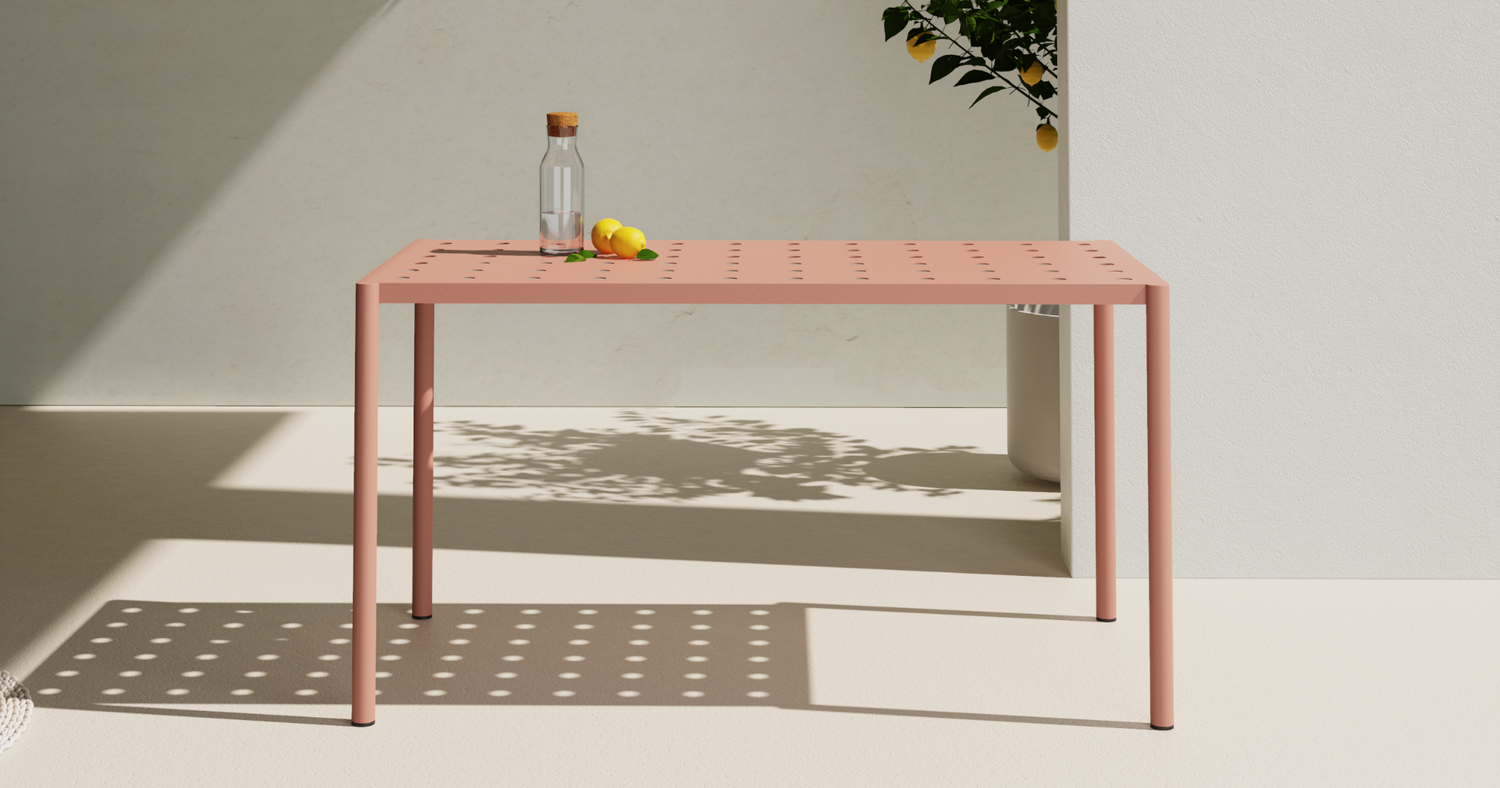
You have an outdoor space and are looking for the right table, but everything you find online seems cheap, banal, or not durable enough.
You’ve already browsed a thousand options, but doubts plague you: what is the right material for an outdoor table that I won’t have to replace next year? What’s the best place to put it? How do I match it?
We understand you.
The point is that choosing an outdoor table isn’t like buying an appliance. It’s not just about measurements and capacity. A garden or terrace table is the heart of a space that, if you think about it, you’re trying to turn into a real room, open to the sky. The room where you eat in summer, have breakfast on Saturday mornings, and drink something in the evening with friends.
Outdoor space today is an extension of the home and deserves the same care. That’s why the choice shouldn’t stop at size. Material, shape, and color surprisingly change the atmosphere, practicality, and durability—and making a mistake unfortunately costs over time.
To choose an outdoor table, you need to consider the available space, exposure to weather, the most durable material for your context, the shape best suited for socializing, and colors that match the environment.
How to choose an outdoor table?
Even before thinking about aesthetics, ask yourself: “how do I live the outdoor spaces?”.
Answering this question opens up a scenario that clarifies the features of your ideal table.
Do you want to set up rich lunches or breakfasts with your family? You need an outdoor dining table.
Do you want to use the outdoor space to read, have your morning coffee, or sip an aperitif peacefully while enjoying the view? The ideal is an outdoor coffee table accompanied by an armchair, a small sofa, or a bench.
Measure the space honestly
A table that’s too big on a terrace, balcony, or small porch isn’t an aesthetic problem: it’s a physical problem.
General rule: you need at least 80 cm of free space around the table to move comfortably with the chairs. If you have less space, it’s better to opt for compact shapes, round tables, or side tables instead of the classic dining table.
Think about the actual number of people, not the ideal. Often you buy a table thinking of Sunday lunches with the whole extended family, but then you sit just two of you for 300 days a year. If you’re realistic, you probably need something slimmer instead of a fixed XL table that takes up space all year round.
Consider the style of the house. Paying attention to indoor-outdoor continuity means creating visual coherence. A painted steel outdoor table, with its clean lines and visual lightness, is often the perfect bridge piece between contemporary interiors and outdoor space. It easily matches chairs of different styles and always looks current and fresh.
Maintenance: how much are you willing to do? Some materials (like wood, for example) are beautiful but demanding. If you want something that lasts for years without special care, go for low maintenance and high build quality before thinking about everything else.
What is the best material for outdoor tables?
Without beating around the bush, here are the three main players.
Wood is warm, natural, beloved.
Requires seasonal care, can fade or crack if not treated properly. Perfect for those who love a lived-in character, less so for those who want zero worries.
Plastic and resin are convenient, lightweight, waterproof. They often betray a banal or unoriginal aesthetic, which clashes with the concept of a well-kept residential space. There are design exceptions, of course, but in most cases, they rarely surprise.

Painted steel treated for outdoor use is the contemporary answer: structurally resistant, visually light, designed to be used without too many worries.
It’s easy to clean and lasts for years without losing its aesthetic. It’s the material that best fits the idea of outdoor furniture as an extension of the living space, not as a disposable area with the first cheap chair that comes along.
When it comes to aesthetic durability (that is, how long a piece remains beautiful over time, not just intact), steel proves to be an excellent choice. The color stays intact and cleaning is a matter of a damp cloth. Plus, it doesn’t blow away at the first gust of wind.
Essential lines, a wide choice of colors and materials treated for outdoor use: Hiro outdoor tables are designed to last, like all our products. You confirm this: over 10,000 customers, with an average satisfaction of 4.9 out of 5.
|
How to choose the color of the outdoor table
We know, this point is the source of a thousand dilemmas. One of the most common questions Hiro’s customer service receives is exactly about choosing the right color.
It’s true: color is one of the easiest things to get wrong, but also the one that gives the most satisfaction when chosen well.
Start from the floor. The color of your terrace, balcony, porch, or garden floor is the most concrete reference point. Light stone floors look great with neutral shades like Shell White, but also with bolder colors like Olive Green or Clay.
Gray concrete floors go well with almost everything, but to brighten them up, warm and lively colors like Terracotta are great; terracotta floors are fantastic with greens (Fossil Green or Olive Green).
Don’t ignore the color of the exterior walls. You probably didn’t choose it, but it’s essential to consider it in the overall palette of the outdoor space.
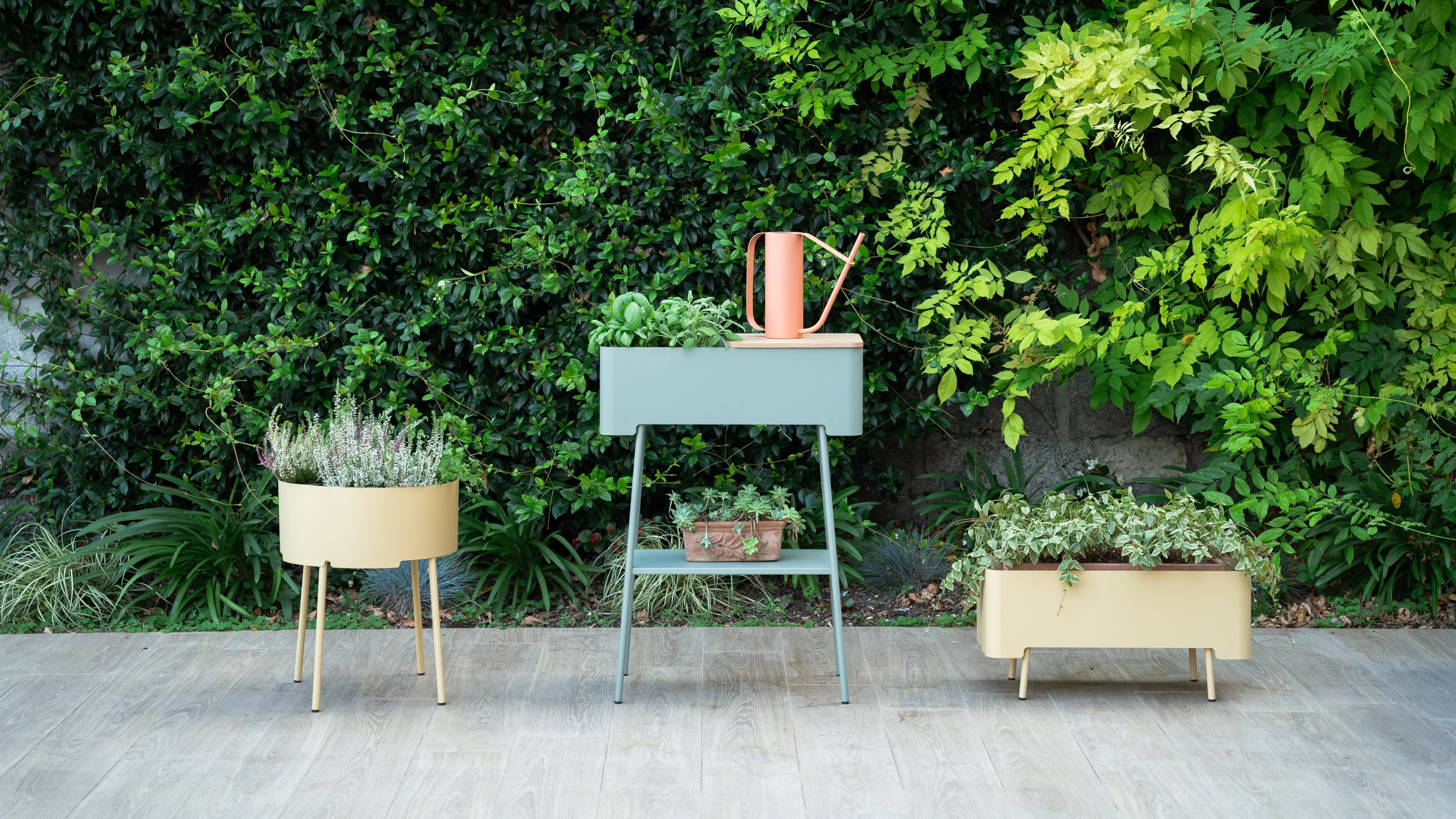
If you have lots of greenery around, natural palettes always work. Greens, Shell White, and Vanilla are colors that harmonize well with the green of plants, the sky, and natural materials.
There’s no better way to choose the color than to try it out, pairing it with the materials you already have. Order color samples of your new outdoor furniture. |
Where to place the table in the garden?
The right position is not always the most obvious one.

Near the kitchen, when possible. Carrying plates, glasses, and those things you always forget is much more pleasant if you don’t have to cross half the garden. Proximity to the kitchen is a comfort you appreciate every time.
Under a pergola or garden cover. The cover obviously provides protection, but it also does something more subtle: it defines the space, creating a "room" even where there are no walls.
In the most panoramic spot of the garden or terrace. If the view is worth it, you won’t mind taking a few extra steps with your favorite drink in hand, even if the best area of your outdoor space is far from the kitchen. A lounge area with a coffee table or a small dining area made up of a square table and stools is the perfect place to enjoy the view.
The coffee table near the lounge area. If you have a lounge corner with an outdoor sofa or armchairs, a low coffee table is essential. It can lean against a masonry bench, sit in the center of an outdoor rug, or connect the seats. This way it becomes the compositional center of that area.
Pay attention to pathways. A table placed in the middle of a passage area quickly becomes tiring. Better to have a space, even small, but cozy and defined.
Create the "outdoor room" with accessories. Outdoor rugs, hanging lights or lanterns on the ground, plant pots, fabrics: these elements visually define the space and make it livable.
If you’re looking for more ideas on how to set up an outdoor space, also read: 5 ideas to furnish and beautify a veranda.
How to cover the outdoor table?
Even the most durable materials can benefit from protection when not in use, especially during winter months or heavy rain periods.
What works: breathable covers specifically for outdoor use (they allow air to pass, prevent condensation), pergolas and fixed coverings, large umbrellas that protect even when the table is not in use.
What not to do: cover with non-breathable plastic sheets, which trap moisture and can cause more problems than they solve. The same goes for makeshift covers with whatever is at hand.
Painted and treated steel for outdoor use resists water and humidity well. To preserve its beauty and durability even longer, it’s helpful to protect it from direct weather exposure and dry it after contact with water.
What to put on a garden table?
A modern outdoor table is not a permanent buffet. The arrangements that work best are the essential ones.
The classic elements that never fail: a vase with a bouquet of flowers picked from the garden as a centerpiece, or a designer fruit bowl to hold fresh fruit just harvested from your trees.

How to decorate an outdoor coffee table?
Less is more: the garden coffee table should be beautiful and complete enough on its own that it doesn’t need extra embellishments.
If well placed, well matched with armchairs and the colors of the outdoor setting, there will be no need to overdo the decor.
The right choice of an outdoor coffee table won’t put you in front of this question.
But by the way, how do you choose?
Outdoor coffee table: the piece that transforms a space
The low outdoor coffee table is often the most underestimated piece of an outdoor setup. Yet it is the one that defines the aesthetic quality and completeness of a lounge space.

Low coffee tables and outdoor coffee tables. They work as the centerpiece of a seating area, as a support next to a lounge chair, or as a connecting element between different garden zones. They can stand alone or in pairs—two different heights, two different sizes—to create dynamism.
Mix of heights. Pairing a low coffee table with a taller one is one of the most effective styling tricks to add visual depth to a compact space.
On a small balcony. A colorful steel coffee table on a balcony of just a few square meters makes the difference between a space that feels like a passageway and one that feels thoughtfully designed.
Coordination with seating matters. It’s not necessary for everything to match perfectly—in fact, it’s better if it doesn’t. A cushioned loveseat without legs looks great with a coffee table featuring unique outdoor legs.
Choose well, just once
A good outdoor table is not just meant to fill an outdoor space. It helps you live better at home, creates conviviality, and builds an environment that remains beautiful season after season, without needing to be replaced every two years.

The difference between a thoughtfully designed piece and one chosen hastily is immediately visible. It becomes even more apparent over time.
Those wondering what the best material is for an outdoor table that lasts over the years will find a concrete answer in painted and treated steel for outdoor use: it is durable, easy to clean, and requires no seasonal treatments.
Explore the outdoor tables and coffee tables made in Italy by Hiro
You will find shapes that fit different spaces, colors with personality, and pieces designed to last: exactly what you need to create a true continuity between indoor and outdoor.