
A corridor with a view. This is often how you end up looking at a long, narrow balcony: too deep for a table, too tight for two chairs side by side, too much of a passageway to really feel like a space to live in.
Yet the shape is not a flaw to endure, but a constraint to design around.
With the right proportions, the right furniture, and some smart tricks, that balcony can become the most surprising corner of the house: a pocket greenhouse, an open-air lounge, or a place where morning coffee tastes like a vacation.
Let's see how, point by point.
1. Enhance the space: clear the passage line
The first rule is also the easiest to forget: a narrow space needs a clear corridor.
Arrange the furniture along the longest wall, as an architect would with a hotel corridor: shelves, planters, and seats line up on one side, leaving a continuous passage on the other.
One more visual trick: play with lines. A floor with slats placed crosswise, for example, visually "widens" the space, tricking the eye more than any furniture would.

2. Choose the right furniture: slender, light, never bulky
In a tight space, every cubic centimeter must be negotiated.
The solution? Slender furniture: shallow and/or that develop vertically.
Speaking of purely aesthetic features, prefer elements with thin legs, open structures, and visually light shapes rather than solid, bulky blocks.

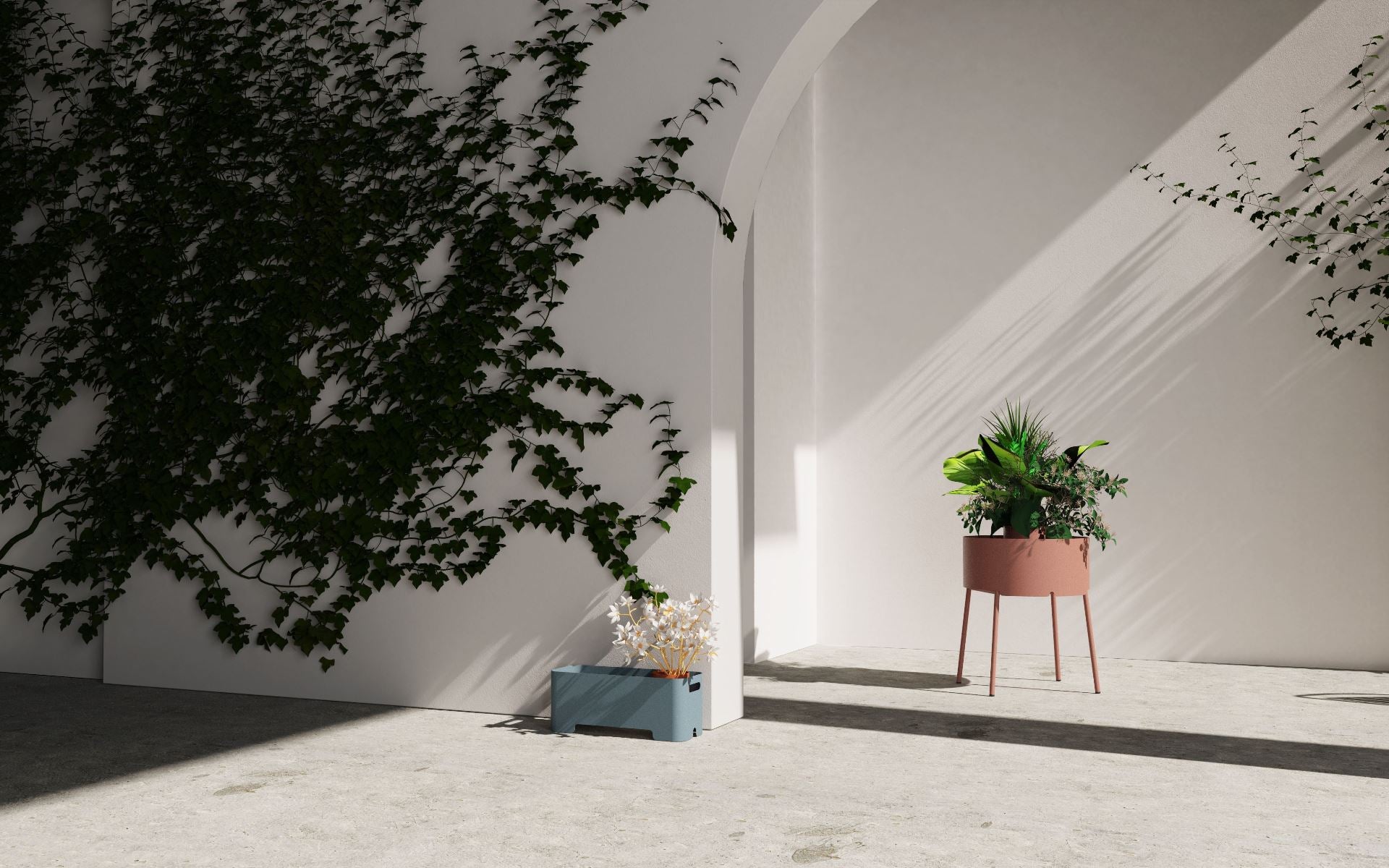
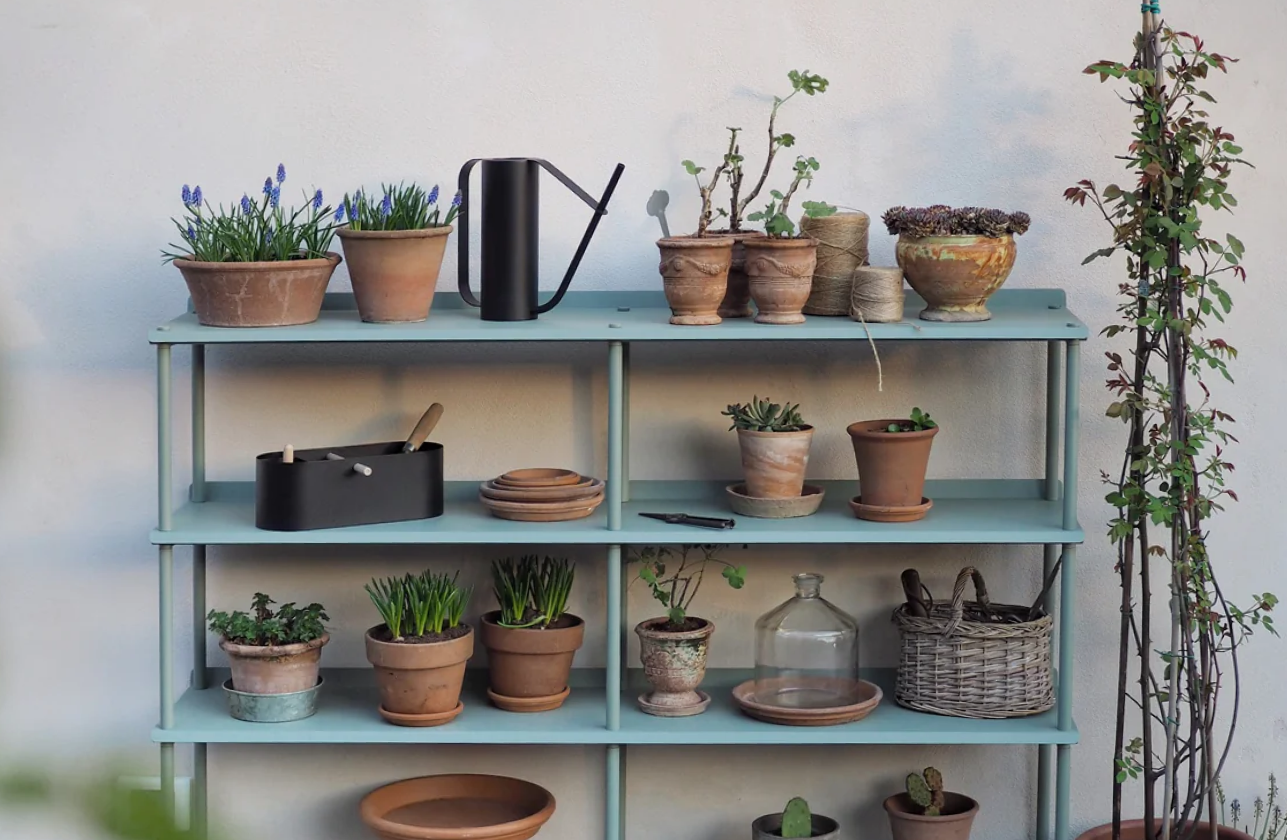
The Levante outdoor shelf series is a perfect example: painted steel frame, slim uprights, shelves that hold plants, watering cans, and garden tools without weighing down the view. .
Another elegant solution is to use the corners, which usually remain empty, freeing up the rest. Balcony corners can be enhanced with round planters with feet, but also with benches or corner seats.

If you use the balcony space for different functions (aperitif, reading, quick lunch), opt for folding tables and stackable chairs: they offer maximum comfort when needed and disappear when not, giving you back precious centimeters.
3. Think vertically: the walls work harder than you think
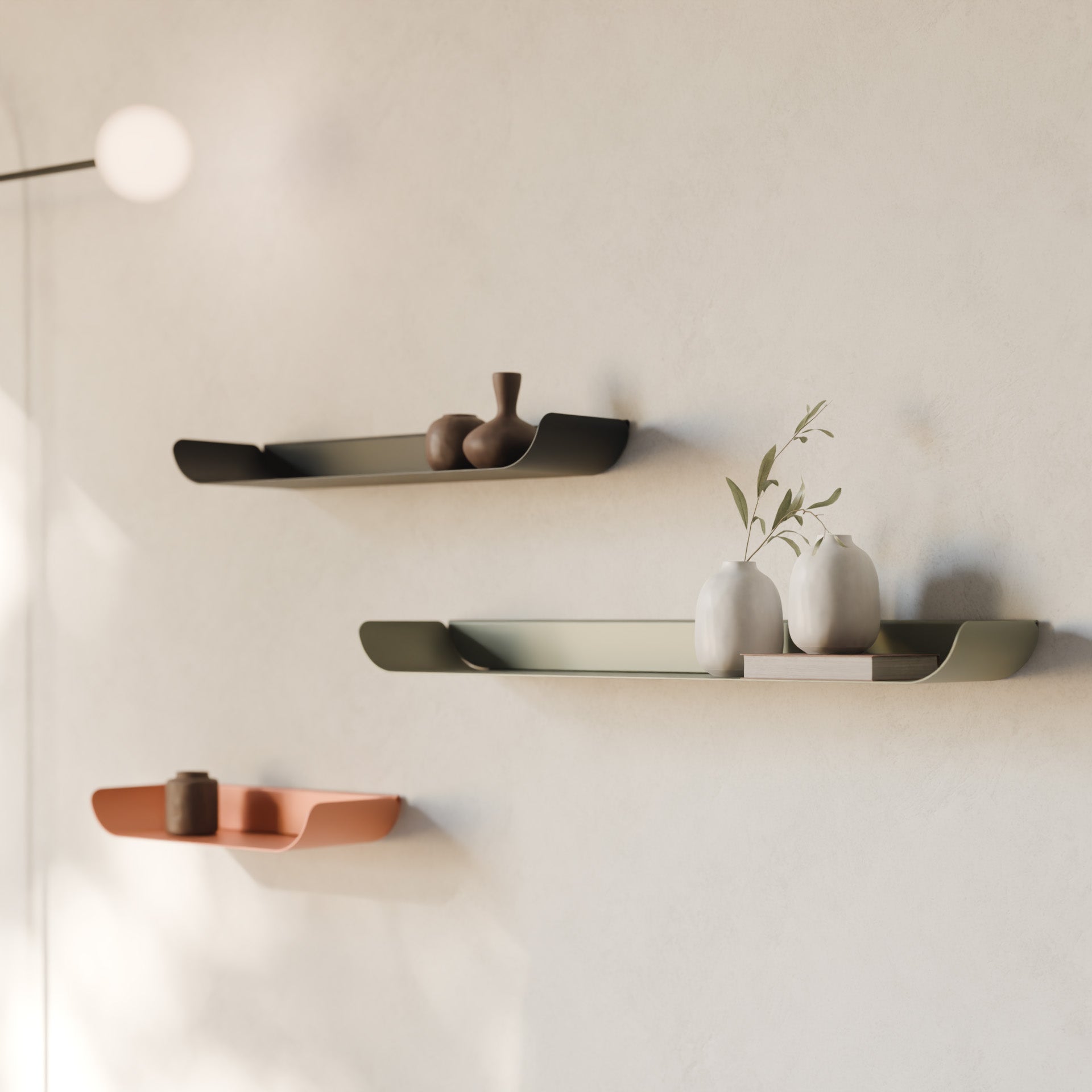
In every narrow and long balcony, if floor space is tight, the wall is a generous surface from which you can gain great advantage.

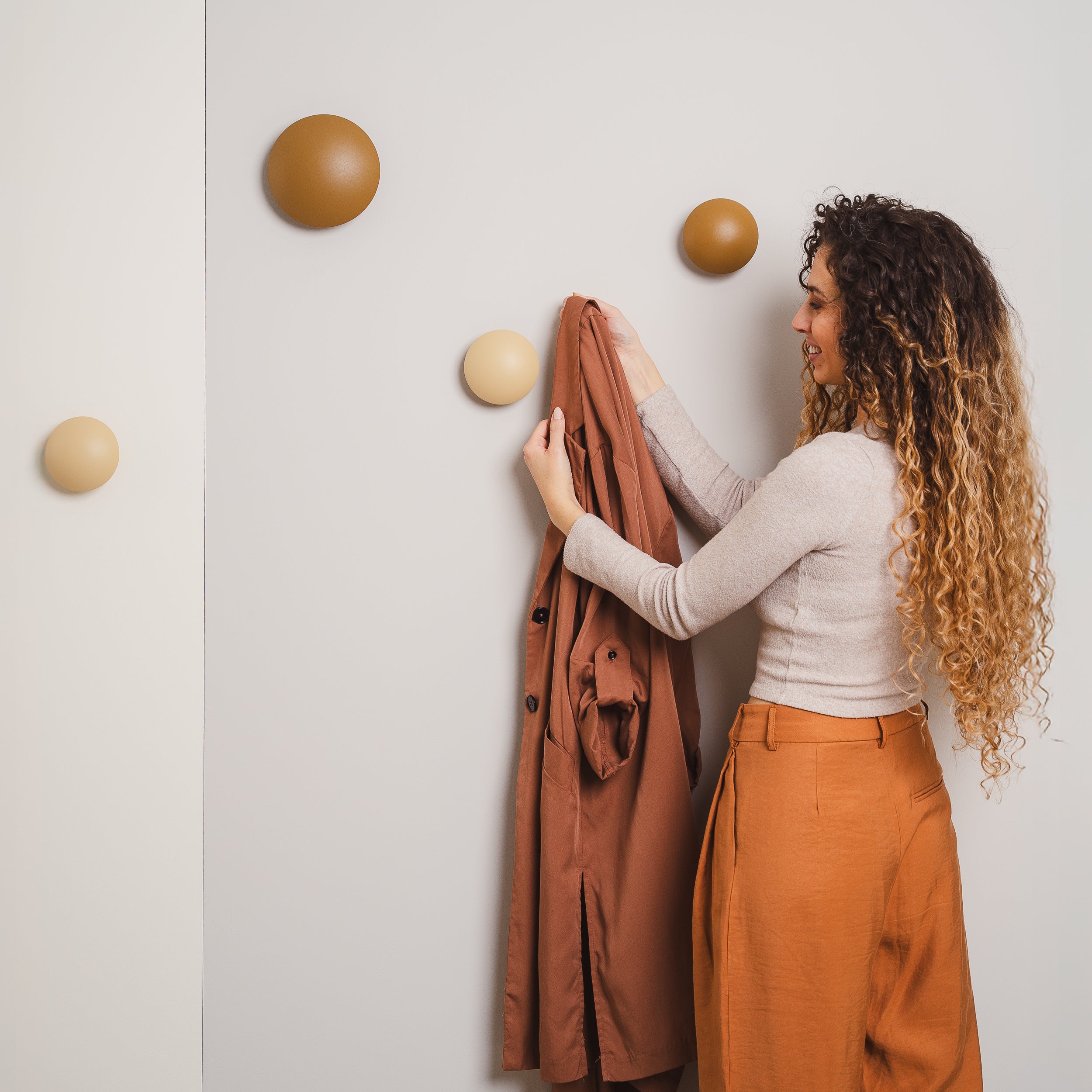
The hanging planters transform a plain wall into a small cascading garden, without taking away a single centimeter of floor space.
The result is a space that develops vertically rather than horizontally: the same amount of greenery and functions, in a fraction of the floor space.
4. Lighting: create atmosphere without taking up space
Light is the only furnishing that never takes up space and is also the most underestimated.
Focus on soft, warm light sources: lanterns, candles, small low-consumption LED lights distributed along the path. Avoid bulky floor lamps: hang, stick, hook, but don’t place on the floor what can be kept up high.

Create the magical atmosphere of summer evenings: discover the Eos lantern
The result is lighting that runs along the length of the balcony like a small glowing path, perfect for summer evenings when the only plan is to stay outside a little longer.
5. A theme, a common thread (even without a green thumb)
A long balcony, if furnished without a plan, risks looking like a random sequence of objects. The solution is to choose a theme that guides every subsequent decision.
A Mediterranean setting, for example, calls for warm colors, aromatic plants, and rustic ceramics. A more romantic atmosphere is created with climbers like Virginia creeper, wisteria, or clematis, which can soften railings and walls.
And if you don’t have a green thumb? No worries: succulents and cacti offer the same visual impact with almost no maintenance.
If you want to explore topics like plant species, containers, and arrangement, you can find everything in this article: How to decorate a balcony with plants: transform your balcony into a green oasis.
6. Order: the real space saver
In a narrow environment, clutter is twice as noticeable. Keeping order is not just an aesthetic issue: it is a functional strategy to recover space.
Baskets, organizers, and containers help group what would otherwise remain scattered: a set like Altea round combines plant pots and tray in a single compact solution, designed especially for those who have no room to waste.

Storing everything on open shelves or storage furniture means visually freeing up space, even when the objects are still there.
7. Fabrics: comfort and color, weatherproof
Cushions, rugs, and covers add personality, texture, visual warmth, and in an outdoor environment, the choice of material is not a simple detail.
Prefer technical fabrics designed for outdoor use, resistant to UV rays, humidity, and stains: only this way cushions and rugs stay beautiful (and clean) season after season, without becoming yet another item to replace every year.
To furnish a long, narrow balcony, always start with the space, not the objects: clear the passage, choose slender and foldable furniture, use the walls vertically, illuminate with hanging solutions, create a common thread with plants and colors, keep everything tidy, and choose durable fabrics.
Small tricks that, combined, completely change the perception of space.
Design furniture that solves problems on a narrow, long balcony
A narrow, long balcony has specific needs: little floor space, vertical development, lightweight elements to move or fold away when needed. Here is the Hiro outdoor selection designed precisely for this type of space.
How to gain space on a long, narrow balcony?
With a shelf that develops vertically instead of in depth: Levante, outdoor shelf occupies a minimal base and transforms an empty wall into a small vertical garden.
Which planters to choose for a narrow balcony?
Those that don’t touch the ground: the Altea wall planters remain suspended, eliminating obstruction in the central passage.
Which table to choose for a long and narrow balcony?
One with a minimal base and light line, like the round Yole table: perfect for a quick coffee, never obstructing the passage.

What seats to use on a balcony with little space?
Light seats, easy to move or stack, like the Op stool: they take up space only when really needed.

How to light a narrow balcony without cluttering it?
With light points placed where needed, without bulky bases: the Eos lantern creates atmosphere without ever blocking the passage.
The details that change everything: how to beautify a narrow and long balcony
The key is not to add cute things.
Planning is the foundation of everything. Focus on a coherent theme of colors and plants: wall planters, a climber along the railing, and a coordinated color palette immediately make a space look more cared for, which otherwise would appear fragmented.
How to make a long and narrow balcony livable?
A balcony becomes livable when it stops being just a "pass-through": just clear the central line, add an evening light point and a couple of lightweight seats to move around depending on the time of day, to transform it into a small corner to live in daily, not just to cross.
If the problem with your balcony isn't the length but the (almost total) lack of space, also take a look at Mini hanging gardens: outdoor ideas for those who only have a windowsill or a French balcony: an article where we offer ideas designed for those who only have a railing or a windowsill as their only outdoor space.